 EN
EN

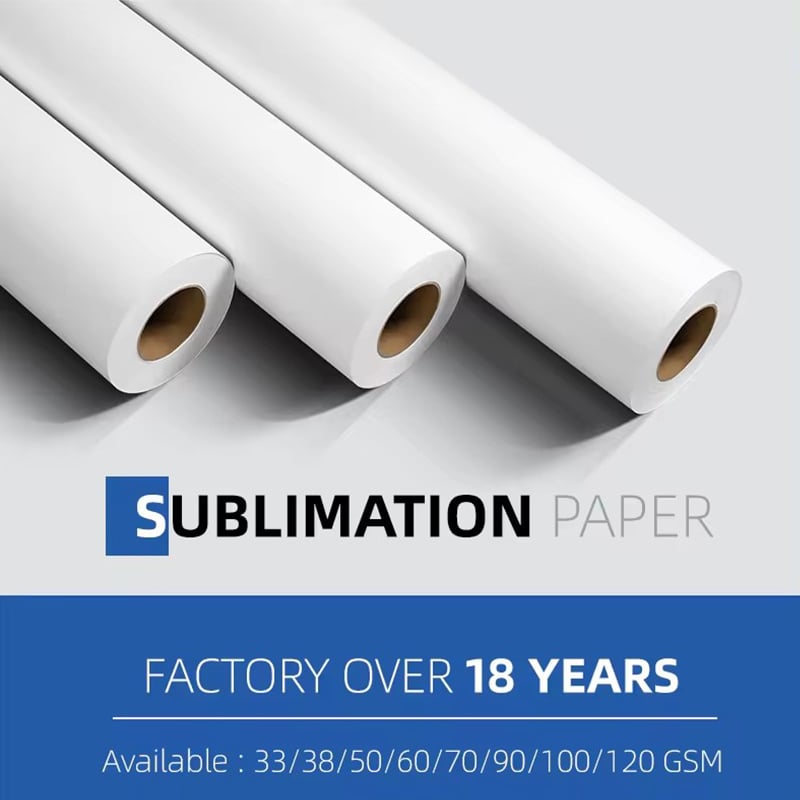
Choosing the right sublimation paper is one of the most consequential decisions a fabric printer or decorating business can make. The type of sublimation paper you select directly influences ink transfer efficiency, color vibrancy, production waste, and ultimately your return on investment. With a growing number of sublimation paper options available across different weights and coating formulations, evaluating each type against your specific workflow is essential for sustainable profit growth.
This article breaks down the major sublimation paper types used in commercial and industrial settings, explains the performance factors that separate them, and provides the evaluation framework you need to align sublimation paper selection with genuine ROI targets. Whether you are printing sportswear, soft signage, or fashion textiles, the right sublimation paper choice can reduce per-unit costs and expand your output quality significantly.
Understanding Sublimation Paper Weight and Its ROI Impact
How Paper Weight Affects Transfer Performance
Sublimation paper is commonly available in weights ranging from 30g to 100g per square meter. Lightweight sublimation paper, such as 30g or 33g sublimation paper, is designed for high-speed roll-to-roll printing on large industrial presses. This category of sublimation paper dries faster, allows for higher throughput, and reduces raw material cost per square meter. For businesses running continuous production runs, lightweight sublimation paper can deliver meaningful cost-per-unit savings that directly contribute to ROI growth.
Medium-weight sublimation paper, typically in the 44g to 60g range, balances ink holding capacity with transfer efficiency. This sublimation paper type is popular with mid-volume operations that print on a variety of fabrics including polyester blends. When sublimation paper holds more ink before the heat press stage, operators experience fewer bleeding issues and more consistent color saturation across large batches. Consistent quality means fewer reprints, which has a direct positive effect on your ROI when running sublimation paper through high-volume jobs.
Heavy-Weight Sublimation Paper for Specialized Applications
Heavier sublimation paper options, such as 90g or 100g sublimation paper, are suited for applications demanding maximum ink load and precision. This weight of sublimation paper is commonly used for short-run, high-value products where color accuracy and detail resolution are paramount. Although heavier sublimation paper carries a higher per-sheet cost, the reduction in misprints and the ability to command premium pricing on finished goods can justify the investment. Evaluating sublimation paper by weight must always be tied to the product type and volume in your production mix.
Coating Technology and Color Output in Sublimation Paper
The Role of Coating in Ink Absorption and Release
The coating applied to sublimation paper is the most critical technical variable affecting color output. A high-quality coating on sublimation paper controls how quickly ink is absorbed during printing and how completely it releases during heat transfer. Sublimation paper with an uneven or low-quality coating leads to patchy transfers, ink ghosting, and color inconsistency. These defects require reprints, consume additional sublimation paper, and inflate production costs in ways that directly erode ROI.
Premium-coated sublimation paper maintains a stable ink layer on the surface until the moment of heat transfer, delivering sharper edges and richer color gamut. When evaluating sublimation paper for a production environment, it is worth requesting test prints on candidate sublimation paper types before committing to bulk orders. The upfront evaluation time spent on sublimation paper coating quality pays dividends across thousands of production meters.
Fast-Dry vs. Standard-Dry Sublimation Paper Coatings
Fast-dry sublimation paper is engineered for high-speed printers where dwell time between printing and the take-up roll is minimal. If standard sublimation paper is used on a fast printer, ink smearing and cockling can occur, damaging both the sublimation paper and the fabric. Investing in fast-dry sublimation paper that matches your printer speed profile eliminates this waste and keeps production moving at optimal throughput. Matching sublimation paper coating type to your specific printer is as important as matching paper weight to your fabric type.
Standard-dry sublimation paper remains cost-effective for slower desktop or entry-level wide-format systems. Businesses should evaluate whether their production volume justifies the upgrade to fast-dry sublimation paper. If print speeds are increasing or batch sizes are growing, transitioning to fast-dry sublimation paper is a logical step for protecting ROI as the operation scales.
Matching Sublimation Paper Type to Fabric and End-Use
Fabric Type Determines Sublimation Paper Compatibility
Not all sublimation paper types are equal when it comes to fabric compatibility. Polyester-rich fabrics require sublimation paper that releases ink fully at standard heat press temperatures, typically between 180°C and 210°C. Using sublimation paper that requires higher activation temperatures on heat-sensitive stretch fabrics can cause fabric distortion, reducing finished goods value. Evaluating sublimation paper compatibility with your specific fabric range is a practical step that prevents costly production errors.
Soft signage and banner applications benefit from wide-format sublimation paper rolls with high dimensional stability. Sublimation paper that stretches or curls during printing causes misregistration on large-format designs. For these applications, choose sublimation paper with reinforced base stock to maintain flat feeding and precise image placement. Proper sublimation paper selection at the product specification stage reduces reprints and supports a stronger ROI on every job.
Short-Run vs. Long-Run Sublimation Paper Strategy
Short-run customization businesses benefit from sublimation paper that offers reliable small-batch performance without requiring extensive calibration. A versatile mid-weight sublimation paper that delivers consistent results across different ink sets is ideal for this segment. Long-run industrial operations, in contrast, should optimize sublimation paper sourcing around bulk roll pricing and machine-specific compatibility. Negotiating sublimation paper supply agreements based on volume commitments is a recognized ROI lever for high-output facilities.
In both cases, the business impact of sublimation paper selection is measurable. Track transfer success rates, ink consumption per meter of sublimation paper, and reprint frequency. These metrics give you the data to evaluate whether your current sublimation paper type is serving your ROI goals or holding them back. A structured sublimation paper evaluation process, revisited regularly, keeps your cost structure competitive as market conditions evolve. Sourcing from a reliable sublimation paper supplier that offers the full weight range ensures you have the flexibility to adapt without disrupting production continuity.
FAQ
Which sublimation paper weight is best for high-volume fabric printing?
Lightweight sublimation paper in the 30g to 44g range is generally preferred for high-volume industrial fabric printing because it reduces raw material cost per meter and supports faster drying at high print speeds. However, the best sublimation paper weight depends on your specific printer model, ink system, and fabric type. Testing multiple sublimation paper weights before committing to a large-format bulk order is strongly recommended to confirm transfer quality and throughput compatibility.
How does sublimation paper coating affect color vibrancy?
The coating on sublimation paper controls how ink is held on the surface and how fully it transfers during heat pressing. A high-performance coating allows sublimation paper to deliver vivid color saturation and sharp detail. Low-quality coatings cause ink to sink into the sublimation paper base, reducing the available dye for transfer and resulting in dull or inconsistent prints. Always evaluate sublimation paper coating quality as a primary factor, not an afterthought, when selecting for color-critical applications.
Can switching sublimation paper types improve my ROI?
Yes, switching to a more appropriate sublimation paper type can meaningfully improve ROI by reducing reprint rates, lowering ink consumption, and increasing throughput speed. If your current sublimation paper is causing frequent transfer defects or production slowdowns, evaluating alternative sublimation paper weights and coating types is a practical first step. Calculate the cost of defects and downtime against the price difference between sublimation paper options to make a data-driven decision that supports your profit targets.